Book Bloggin' Princess Interviews Robert Wideman, author of Unexpected Prisoner

Robert Wideman was born in Montreal, grew up in East Aurora, New York, and has dual U.S./Canadian citizenship. During the Vietnam War, he flew 134 missions for the U.S. Navy and spent six years as a prisoner of war. Wideman earned a master’s degree in finance from the Naval Postgraduate School. After retiring from the Navy, he graduated from the University of Florida College of Law, practiced law in Florida and Mississippi, and became a flight instructor. Robert Wideman holds a commercial pilot’s license with an instrument rating, belongs to Veterans Plaza of Northern Colorado, and lives in Ft. Collins near his two sons and six grandchildren.

Connect with the author on the web: Facebook / Twitter / LinkedIn
Q: Congratulations on the release of your book, Unexpected Prisoner. What was your inspiration for it?

A: My two sons and six grandchildren inspired me to write this book, because I wanted something to leave something permanent on paper for them about my experience as a POW in North Vietnam. I also wanted to tell the world that it was harder on our families than it was on us.  We knew that we were getting our two slops and a flop every day. Our families did not know anything about our treatment. I also wanted to rebut the propaganda that our government released to the public about the treatment of POWs in North Vietnam.
Q: Why was the writing of this book important for you?

A: Writing this book was important to me, because I wanted something permanently on paper for my children and grandchildren. I also wanted to tell people how difficult this experience was on our families. My mother could not eat a steak for six years, because she did not know if the North Vietnamese gave me enough to eat. This experience destroyed my father. When I came home he looked like he was 100 years old. He was only 57.
Q: How was your creative process like during the writing of this book and how long did it take you to complete it? Did you face any bumps along the way?

A: I think my creative process was like zero. I just wrote the way I talk, because someone told me that that is what you are supposed to do. It took me four years to write 100 pages. Two years ago, at age 71, I realized that I might not finish this book before someone put me in the ground. I contacted Graham Communications in Denver, Colorado.  Mark Graham introduced me to Cara Lopez Lee. Cara is the co-author. It took her two more years to finish this book. This book has 374 pages now. She did a wonderful job. The only bumps I faced along the way were when I edited what Cara wrote. We fought like cats and dogs, because she looked at the book from an artist’s point of view, while I looked at the book from my personal experiences. We resolved   our differences, and I think, together, we came up with a great product.
Q: What is the one thing you hope readers will take away from your book?

A: I hope that readers will read my book and question the official story that our government put out on the treatment of POWs in North Vietnam. I also hope that readers will question everything our government does and says. The government looks out for their favorite interest groups and ignores others.
Q: What discoveries or surprises did you experience while writing this book?

A: I learned that it took a lot longer to write a book than I thought it would. I also learned that sometimes you just have to take a break and walk away from your work. Otherwise you might go a little stir crazy. You also have to learn to get along with the publisher and the co-author otherwise all your work will go to waste.
Q: How do you define success as an author?
A: I define success by the reaction of those who actually read my book.  So far, the response has been terrific. If you go on Amazon, my book has never received lass than 5 stars, which is the best you can do. I am also very happy that veterans who were in the infantry really like my book too. Many infantry veterans think that pilots had an easier job during wartime than they did, and they were right. The infantry always bears the brunt during wartime. I believe that veterans who had to fight on the ground can relate to my book, because my book supports what they had to go through and how they feel.
Q: Could you talk a little bit about your publishing process?

A: Yes I can. It was a goat rope! The publishing experience was totally unexpected. It seems like the publishing industry is set up for the benefit of distributors, printers, and publishers. It is definitely not set up for the benefit of authors. Amazon takes 55% off the top. Then IngramSpark charges 6.44 to print each copy. On a book that retails for $15.95 that leaves $.74 profit on each book before taxes. That is less than 5% profit. That is just outrageous and tells you all you need to know about the publishing industry. 
Q: What advice would you give to aspiring nonfiction writers? Could you offer some tips or resources that have been helpful to you?

A: I believe that everyone has a story to tell. You need to do a lot of research on publishing. I am still finding out new ways I could have gone both in the writing , the publishing, and the distribution.
Q:  Anything else you’d like to tell my readers?

A: Yes. Buy more books.
/////////////////////////////////
Title: UNEXPECTED PRISONER: Memoir of a Vietnam Prisoner of War
Genre: Memoir
Author: Robert Wideman
Website: www.robertwideman.com       
Publisher: Graham Publishing Group
Find on Amazon
About the Book: 
When Unexpected Prisoner opens, it’s May 6, 1967 and 23-year-old Lieutenant Robert Wideman is flying a Navy A-4 Skyhawk over Vietnam.  At 23, Wideman had already served three and a half years in the Navy—and was only 27 combat days away from heading home to America. But on that cloudless day in May, on a routine bombing run, Wideman’s plane crashed and he fell into enemy hands. Captured and held for six years as a Prisoner of War in Vietnam, Wideman endured the kind of pain that makes people question humanity.  Physical torture, however, was not the biggest challenge he was forced to withstand.  In his candid memoir, Unexpected Prisoner, Wideman details the raw, unvarnished tale of how he came to understand the truth behind Jean-Paul Sartre’s words: “Hell is other people.”

A gripping, first-person account that chronicles the six-year period Wideman spent in captivity as a POW, Unexpected Prisoner plunges readers deep into the heart of one of the most protracted, deadliest conflicts in American history:  the Vietnam War. Wideman, along with acclaimed memoirist Cara Lopez Lee, has crafted a story that is exquisitely engaging, richly detailed, and wholly captivating. Unexpectedly candid and vibrantly vivid, this moving memoir chronicles a POW’s struggle with enemies and comrades, Vietnamese interrogators and American commanders, lost dreams, and ultimately, himself.

With its eye-opening look at a soldier’s life before, during and after captivity, Unexpected Prisoner presents a uniquely human perspective on war and on conflicts both external and internal. An exceptional story exceptionally well-told, Unexpected Prisoner is a powerful, poignant, often provocative tale about struggle, survival, hope, and redemption.

🏰 Book Feature: Battle for Cymmera by Dani-Lyn Alexander

Title: Battle for Cymmera, Kingdom of Cymmera Book Three
Author: Dani-Lyn Alexander
Publisher: Lyrical Press/Kensington
Pages: 226
Genre: YA Fantasy
With Chayce Maynard on the run, Ryleigh and Jackson can finally begin rebuilding their kingdom. But when a cryptic message suggests Chayce was seen in Argonas, chaos creeps back into Cymmera once more . . .

Jackson knows Cymmera will never be safe until Chayce, guilty of treason, is detained and executed. After ordering Cymmeran guardsmen to scour the land, he and the Death Dealer team brave wild Argonas in search of the informant who spotted his foe. And in his absence, Jackson not only leaves the throne empty, but the kingdom vulnerable to attack . . .

As a vicious army descends on Cymmera, Ryleigh is forced to flee to an uncharted realm with a small group of survivors—a place Jackson has no chance of discovering. Alone, but for the few people she was able to save, Ryleigh must decide whether to reclaim her kingdom or remain in the new realm forever, forsaking all she left behind . . .

Amazon | Barnes & Noble

Book Excerpt:

As she slid past her throne, Ryleigh’s sword caught on the arm, and she took a step back and untangled it. She’d never get used to wearing the stupid thing everywhere she went. If not for Jackson’s insistence, it’d probably be stuffed under her bed beside the baseball bat she kept hidden there.
She pulled open a drawer on the side table behind her throne and rifled through the papers she’d stuffed in there in search of her leather appointment book. If she couldn’t find answers, may as well get some work done. It was either that or dwell on Jackson’s mission and the terror it brought. She pressed a hand against her heaving stomach. No. She couldn’t think about that. She had more immediate problems she might actually be able to do something about.
Several meetings had to be scheduled, and without writing them down, she’d never keep track of where she was supposed to be. Especially with her mind so jumbled with images of Jackson going up against Chayce.
She snatched the book, shoved the drawers shut, and turned to leave.
Ryleigh’s vision blurred. The air shimmered in the center of the throne room, and her ears popped.
She ripped her sword from its sheath even as the portal opened.
A seven-foot-tall beast built of solid muscle tore through the portal. A triple headed flail swung from one massive hand.
About the Author

Dani-Lyn lives on Long Island with her husband, three kids and three dogs. She loves spending time with her family, at the beach, the playground, or just about anywhere. In her spare time, which is rare, she enjoys reading and shopping—especially in book stores. Some of her favorite things include; Bernese Mountain Dogs, musicals, bubble baths and soft blankets. She’s an incurable insomniac, and she has an addiction to chocolate.

WEBSITE | TWITTER | FACEBOOK

🏰 Book Feature: Forbidden Knight by Diana Cosby

Title: Forbidden Knight
Author: Diana Cosby
Publisher: Lyrical Press
Genre: Historical Romance
Format: Ecopy 

“Diana Cosby is superbly talented.” —Cathy Maxwell, New York Times bestselling author 

Deep within Scotland, a healer and a warrior join forces to protect Scotland’s future . . .

There is an intruder in the woods near King Robert Bruce’s camp, but when Sir Thomas MacKelloch comes face-to-face with the interloper, he is shocked to discover his assailant is a woman. The fair lady is skilled with a bow and arrow and defiant in her responses. The wary Knight Templar dare not allow her beauty to lower his guard. Irritated by his attraction, he hauls her before his sovereign to expose her nefarious intent.

Outraged Sir Thomas dismissed her claim, Mistress Alesone MacNiven awaits the shock on the arrogant knight’s face when he learns that she has told the truth. But it is she who is shocked, and then horrified, as it is revealed that her father, the king’s mortal enemy, has betrothed her to a powerful noble, a deal that could jeopardize the king’s efforts to unite Scotland. Robert Bruce orders Sir Thomas to escort Alesone to safety. As they embark on a harrowing journey through the Highlands, Alesone tries to ignore her attraction to the intimidating warrior, but as she burns beneath Thomas’s kiss she realizes this fearless knight could steal her heart. 

MEET THE AUTHOR

diana-cosby   

 A retired Navy Chief, Diana Cosby is an international bestselling author of Scottish medieval romantic suspense.  Her award-winning books are translated in five languages.  Diana has appeared at Lady Jane’s Salon, in NYC, and in Woman’s Day, on USA Today’s romance blog, “Happily Ever After,” MSN.com, and in Texoma Living Magazine.

After retiring as a Navy Chief, AGC(AW), Diana dove into her passion – writing romance novels. With 34 moves behind her, she was anxious to create characters who reflected the amazing cultures and people she’s met throughout the world.

Her years of living in Europe inspired Diana to write in the medieval time frame.  After watching the movie Braveheart and with her passion for writing complex plots, the idea for the MacGruder brothers series was born.

With the release of her 1st book in her new Scottish medieval The Oath trilogy, An Oath Taken, which hit bestseller lists in Canada and the United Kingdom, she’s now preparing for the release of the e Box Set of the MacGruder Brothers series on February 24th, and the last two books in The Oath trilogy, An Oath Broken – 22 June, and, An Oath Sworn – 23 December, 2015!

Diana has many passions in life, but one that resonates in her life is that of giving. She firmly believe that each of us can make a positive difference in another person’s life.

Some of the charities she supports are listed below: ntfslogo

The National Trust for Scotland, which acts asguardian of Scotland’s magnificent heritage of architectural, scenic and historic treasures.

Habitat For Humanity, which gives a deserving family more than a home, but a foundation upon which to build their dreams..

Semper Fi Fund , is a 501(c)(3) nonprofit to help with immediate financial support for injured and critically ill members of the U.S. Armed Forces and their families.

Homes For Our Troops, assists severely injured Servicemen and Servicewomen and their immediate families through various venues to aid them in building a home that allows them live a more independent life.

The Navy SEAL Foundation, provides immediate and ongoing support and assistance to the Naval Special Warfare community and their families.

CONNECT WITH DIANA: WEBSITE

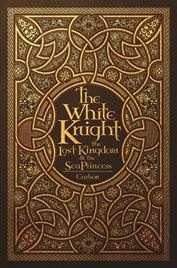
🏰 Book Feature: The White Knight, the Lost Kingdom and the Sea Princess by Judy Carlson

Title: The White Knight, the Lost Kingdom, and the Sea Princess
Author: Judy Carlson
Publisher: Nordskog Publishing, Inc.
Publication Date: July 1, 2015
Format: eBook / PDF / Paperback
Pages: 476
ISBN: 978-0983195757
Genre: Mythical Fantasy


Buy The Book:


Book Description:

Just as the creator of the Chronicles of Narnia decided to try his writer’s hand and imagination, I decided to try something too.  And so, I have written a story of my own having been prompted by that same idea of creating a God presence in another place.  No, it is not Narnia but it is a new world similar yet different from our own.  Surely, as I write this, I was inspired by the man who has invited tens of thousands of readers and not a few writers to write, think and look beyond this ‘shadow land’ called earth.  I have named it The White Knight, the Lost Kingdom, and the Sea Princess’. 

It is a story of intrigue and ever present danger in a world populated by creatures and mortals, whose destiny hangs by the threads of an Emperor’s vision,  a prince’s lost love,  mysterious foes, enchanting  forest maidens, unlikely heroes, and a mermaid-heroine. All of this is wrapped up in a champion so invincible, yet mysterious, that he challenges the Dark Sorcerer with supernatural forces of a fascinating nature, using even the humblest of defenders.  This profound love story will leave you with a taste for a country and a universe beyond your dreams and even imaginings.  A world that is A fairy tale come true, and one “you will never want to end”.

IT MAY BECOME YOUR TRUEST ‘HAPPILY EVER AFTER’ STORY, AND perhaps YOUR OWN FAIRY TALE WILL NEVER END AS WELL.


Book Excerpt:

Chapter 1:

The Vanquished Kingdom

Under the Laws of Providence We have duties which are perilous. –Austin Phelps

Affliction is a treasure, and scarce any man hath enough of it. –John Donne
A deathly pall hung over the palace and the city of Ajar as the threatening presence of the insidious Black Guard escalated. 

“Hurry!” called the Queen to her maidservant, “Come quickly, Dianna!”

“Yes, Your Majesty!” 

“The trunk is in my wardrobe closet. Count Amas has ordered two of his trusted men to secure it for me. They will take it to the cottage of the nursemaid Elnora and secret it there. We only hope they can avoid discovery.” 

“Yes, madam,” the girl answered in a trembling voice. 

“Disguise it with this linen cloth, Dianna, and lay flowers upon it. If noticed at all, a covered table will arouse less suspicion than a royal trunk.” The Queen of the Eastern Islands paused and lowered her head for a moment. Then glancing up at the servant girl, she said, “If evil befalls both Lady Elnora and me, reveal the trunk’s whereabouts only to a trusted friend. Perhaps my son Loren still has breath somewhere in this dim world and will come thither to claim it one day.”

“But, Your Majesty, surely the Lord Regent would not dare to hurt you!” The girl began weeping. Queen Maybella took her by the shoulders, fighting back her own tears. 

“Forgive us, maiden, for we allowed evil to enter our beloved kingdom. Weep not for us. If we perish, we shall go to the White City. Weep for those who remain here in this place.” The lady’s voice became intense. “You must flee the palace if we are . . .removed. This wicked Usurper will come to his undoing some day. Yet as for you, without my protection, you will be. . . . Please, you must flee. Trust no strangers, Dianna. Aryel the White Knight will return. Be strong until then.” 

(The increased power and control of the Lord Regent and his Black Guard had rendered the king and his advisors only figureheads. The royal family were little more than prisoners in their own palace. Fear of the attacks of a horrible dragon had spread like an epidemic over the citizens of the Eastern Island Kingdom of Ajar. In as much as it seemed only the Lord Regent had power over the fearsome beast, they had capitulated. Kneel or perish was his mantra. They were a free people no more. The few citizens who rebelled were killed, and so the underground resistance was born.) 

The handmaiden of the queen did as her mistress bid her. When the soldiers came to take the trunk, it appeared to be a bench or table adorned for a summer tea. Several hours later, there came shouts and then screams from the royal family’s quarters. King Elmern’s voice was commanding, but to no avail. “Do not harm my sons! Take me only!” 

A thunderous voice roared back, “Silence, you fool! If I would destroy you, why then would I leave an heir!” Following a tortuous silence, the Black Guards’ boots stomped through the halls. Then they paused behind the chapel door. The door shook from their pounding blows. The maidservant yet stayed by her mistress.

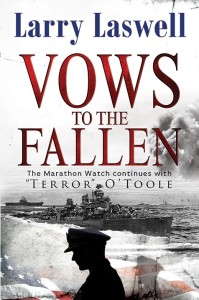
🏰 Book Feature: Vows to the Fallen by Larry Laswell

Title: Vows to the Fallen
Author: Larry Laswell
Publisher: Marshell Publishing
Publication Date: August 14, 2015
Format: Paperback – 277 pages / eBook  / PDF
ISBN: 978-0986385322
Genre: Historical Fiction / Military / Sea Story

Buy The Book: 
Book Description:


Vows to the Fallen
An Officer’s Journey Through Guilt and Grief
Another techno-thriller from the author of The Marathon Watch
August 9, 1942, 01:42 hours
USS Green on patrol off Red Beach, Guadalcanal
Bridge Officer: Lieutenant Patrick O’Toole
Lieutenant O’Toole’s goal is simple: someday he wants to become an admiral. But in a few moments, his life will change . . . forever. Yesterday, the marines stormed the beaches of Guadalcanal. Today, the Japanese Navy will strike back. The sudden and horrific carnage scars O’Toole for life and throws him into the abyss of survivor’s guilt and posttraumatic stress.
The Pacific War does not wait for O’Toole to heal. Duty calls, each new assignment brings more responsibility, and the roll call of the fallen grows. At the Battle of Mujatto Gulf, O’Toole faces a superior battle-hardened Japanese fleet and discovers the strength within him to climb from the abyss and find his true life’s mission. To the fallen, he vows never to abandon that mission no matter how high the cost.

Book Excerpt:


Chapter 1
August 8, 1942, 2346 Hours
USS Green; 45 nautical miles northwest of Red Beach, Guadalcanal
Lieutenant Patrick O’Toole considered himself a career naval officer, and someday he hoped to be promoted to admiral. At Annapolis, his teachers had taught him the horrors of war, but he had never experienced combat. That was about to change and it would change him forever.
The steel ladder rattled as he clambered to the wheelhouse deck to assume the midwatch. On the wheelhouse deck, the port fifty-caliber gunner slouched with his back to the sea and chatted with the lookout on the flying bridge one level above. The helmsman faced the starboard bridge wing and had but one hand on the wheel. Dim red lights above the chart table and the polished brass compass binnacle added little illumination to the wheelhouse, and the men, gray smudges in the dark, seemed unconcerned. O’Toole’s concern bordered on anger, but he remained silent.
Find out what’s going on then fix it.
A man on the flying bridge lit a cigarette. This was way out of bounds. “Snuff your butt. The enemy can see that for miles,” O’Toole said, hoping his voice had a bark to it.
O’Toole had seen this before. Captain Levitte ran a relaxed ship, but this wasn’t peacetime. They were at war in enemy waters. O’Toole read the message dispatches, the captain’s night orders, and the chart. None of it good news, especially the report of a Japanese battlegroup headed south.
He located Lieutenant Karl, the officer of the deck on the port bridge wing. Karl’s life jacket vest was open, revealing a sweat-soaked khaki shirt, and sweat beaded on his brow.
Karl slouched on the bridge railing as O’Toole approached “What’s your status?” O’Toole asked.
Karl rubbed his day-old stubble. “At Condition III. Fire in all four boilers. Superheat lit, and the plant is cross-connected. Starboard steering motor, port steering engine” Karl droned as he went through the standard litany of the watch change. “On course zero-seven-zero at ten knots. Straight line patrol between points Able and Baker on the chart as per the captain. You have about ten minutes before you turn around and head back to point Baker. Received a report of Japanese ships headed south five hours ago. Told the captain, and he said Intel couldn’t tell the difference between a cruiser and a sampan. Besides, nothing will happen before dawn. Aircraft overhead, told the captain, he says they’re from our carriers. That, and the captain said to cut the crew some slack; they’re tired. I just ordered the cooks to make a fresh batch of coffee; you’re gonna need it. That’s about it.”
“Why aren’t we zigzagging?”
“Captain’s orders. Straight line patrol between points Able and Baker is what he wanted.”
“With an enemy force headed south we should be at Condition II at least.”
“I don’t know about that, but the captain wants to give the crew some rest.”
“Do we have star shells loaded or at the ready?”
“No.”
“Which gun mounts are manned?”
“Mounts 51 and 55.”
“Only two?”
“Yes, and before you ask, one-third of the anti-aircraft batteries are manned, and I told those gun crews they could sleep at their stations.”
“Are the crews in Mounts 51 and 55 asleep?”
“Probably.”
Out of professional courtesy, O’Toole didn’t challenge Karl, even though he would have been justified in refusing to relieve Karl of the watch until Karl corrected the battle readiness of the ship.
O’Toole saluted Lieutenant Karl and said, “I relieve you, sir.”
Karl nodded. “This is Mister Karl, Mister O’Toole has the deck and the conn,” Karl said to the bridge crew.
“This is Mister O’Toole, I have the deck and the conn,” O’Toole replied.
Karl handed O’Toole his life jacket, helmet, and gun belt and walked to the small chart table in the forward port section of the wheelhouse to complete his log entries. O’Toole brushed back his flaming red hair and put on the helmet, life jacket, and gun making sure all straps were cinched tight.
“Boats, over here,” O’Toole said to the boatswain mate of the watch as he headed to the starboard bridge wing. It was a lazy night: clear sky, high overhead clouds, calm sea, a slight breeze, and the ship plodding forward at ten knots. A night like this could dull the senses of the best of men. He couldn’t let that happen.
“Boats, square your watch away. We are in enemy waters, and there are reports of a column of Jap cruisers headed our way. I want everyone on their toes.”
“Aye, aye, sir.”
“Messenger, over here,” O’Toole said, beckoning the watch messenger.
“Go below and wake up the chiefs and tell them there are enemy ships in the area. I want them to make sure their watches are alert and ready. Tell the gunnery chief I want him on the bridge.”
“Yes, sir,” the messenger said and headed for the ladder.
A few minutes later, the gunnery chief appeared barefooted and in a white T-shirt. “Yes, sir, you wanted to see me?”
“Jap ships are headed our way. Check your gun crews; I want them alert with their eyes to the sea. Bring six star shells to the ready with one round in the mount. If we come under fire, I want Mount 51 to fire three star shells in a 180-degree spread without orders from the bridge.”
“What’s up, sir?”
“Not sure, chief, except we are in dangerous waters and the crew is asleep.”
“Will do, sir. Should I stay with the gun crews?”
“Wouldn’t be a bad idea, chief. Do what you think is best, but be aware things might get worse at dawn.”
“Yes, sir.” The chief trotted to the ladder and disappeared.
Lieutenant Karl finished his log entries and left the bridge. O’Toole stood next to the quartermaster at the chart table in the forward port section of the wheelhouse. He retrieved the sighting report. Five Japanese cruisers and four destroyers headed south at thirty knots. O’Toole plotted the ten-hour-old sighting location on the chart and walked the dividers across the chart to estimate the current location of Japanese forces. They would have passed the Green an hour ago and would now be on top of the northern defense line around Red Beach.
The receding drone of an aircraft off the port bow caught his ear. They were too far from the Japanese airbase at Rabaul for them to have planes this far south at night. It didn’t make sense: he didn’t think the carrier aircraft could operate at night, but spotter planes from a cruiser could.
Nothing had happened. Maybe the Japanese column had slowed or diverted. Naval doctrine taught officers to avoid night attacks since it complicated the battle, and everyone knew you couldn’t shoot at an enemy hiding in the darkness. Still, everything added up to a night counterattack against the Guadalcanal invasion force.
“Get the captain up here on the double. I’ll be on the flying bridge,” O’Toole said the watch messenger.
He felt better on the flying bridge where he had an unobstructed view of the sea and sky. He swept the horizon with his binoculars: nothing but a black night.
The crew was exhausted from the invasion of Guadalcanal the prior morning. The shirtless bodies of a hundred sleeping men escaping the oppressive heat and humidity of their berthing spaces lay on the dark main deck. Not regular navy, O’Toole thought, but he couldn’t object because the crew needed the sleep.
“What’s up, Pat?” Captain Levitte asked as soon as his head popped above the flying bridge deck level.
“I think we have trouble, Captain. The Japanese column sighted in the intelligence report should be on top of the northern defense line right about now. We should be at general quarters or at least Condition II and be zigzagging. There could be subs in the area.”
Levitte rubbed the back of his neck, then put his hands in his pockets, and walked in a tight circle with his eyes on the deck. “Look, the Japs aren’t that smart, and you should know not even the Japs are dumb enough to attack at night. Nothing will happen until the sun comes up. In the meantime, cut the crew some slack; they’re tired and need their sleep.”
“I’m sorry, Captain, but that doesn’t make sense. The sighting said the Japs were at thirty knots. They wouldn’t do that and then slow down to wait for the sun to come up.”
“No matter what happens we’ll kick their ass,” Levitte began. “We kicked their ass in the Coral Sea and Midway. Now we’re kicking their ass off Guadalcanal. The marines ran the Jap garrison into the jungle before lunch. They can’t stand up to us no matter what, so there’s no reason to get worked up about it.”
“To be safe, let me take the ship to Condition II and zigzag. It won’t hurt anything.”
“No, lieutenant. My night orders said to cut the crew some slack, and there is no need to waste fuel zigzagging. You read my night orders, didn’t you?”
“Yes, sir.”
“Good. Follow them, and let me get some sleep.”
The shirtless lookout stiffened. “Sir, light flashes, port beam.”
Both men turned. Staccato bursts of light above the southern horizon illuminated the sky.
Another voice called out, “Flares off the port beam.”
The night erupted. White-golden flashes close to port blinded O’Toole. Captain Levitte’s chest exploded into a mist of blood. Shells exploded against the mast, and men dove to the deck.
On his stomach, O’Toole fought his life jacket as he rolled to the starboard edge of the deck. Crawling under the railing, he let himself over the side. He was about to let himself drop the last three feet when a jolt catapulted him to the deck below. His head hit the deck, and despite his cinched helmet, the blow stunned him to the precipice of unconsciousness. O’Toole fought to bring himself back to the present as he wobbled to a crouched position.
Concussions from explosions aft the wheelhouse punched at his chest and abdomen. He had to go through the wheelhouse to the port side to see the enemy ship. In the wheelhouse, only the quartermaster was up, crouching in the corner by the chart table. Sparks and flashes of incoming fire covered the aft bulkhead and enveloped the wheelhouse in smoke, shrapnel, and debris. Broken, screaming bodies littered the deck.
He fought his way through the wheelhouse across shattered glass that slid like ice across the blood-drenched deck. The Green’s guns hadn’t returned fire.
He turned to find the phone talker. A flash memory of the phone talker’s body falling next to the captain made him stop. The phone talker was dead along with most of the bridge crew. He was alone; he had no bridge crew, and there was no one left to command. To anyone who could hear, he yelled, “Tell the gun crews to return fire.”
On the port bridge wing, he peered over the railing. A thousand yards away, two searchlights blinded him, and a torrent of tracer fire arched toward the Green. Muzzle flashes from the enemy ship’s heavy guns ripped at the darkness, and spasmodic explosions on the Green followed each flash.
On his stomach looking aft, he tried to understand the hell erupting around him. Black smoke spewed from golden fires, and smoke boiled across the fantail near the depth charge racks. Antiaircraft rounds raked the Green’s main deck, tearing men apart; the lucky ones leapt overboard.
In the forward boiler room, the port bulkhead ruptured three feet below the waterline in a flash of light, wrenching the keel. Shrapnel pierced the two Babcock & Wilcox boilers, which exploded upward, shredding the main deck overhead. A half-second later, a second explosion severed the keel, and a third tore the shattered hull of the Green in two.
Sheets of water vaulted into the air, and the explosions pushed the Green hard to starboard and lifted it upward in a death spasm.
Torpedoes. The word lingered in O’Toole’s mind until he understood, then it vanished. He pulled himself to his feet. Ruptured boilers roared beneath clouds of steam.
The Green hinged aft the deckhouse. The stern rose and began its slide beneath the surface. When the cool seawater reached the aft boilers they blew a ten-foot mound of white water to the surface. The mound collapsed into a steam haze low above the water. As the first wisps of steam dissipated, they dragged O’Toole from his stupor.
The gunfire stopped. The searchlights were gone. Screams, moans, and the sound of rushing water welled up to fill the silence. He strained his eyes for an enemy invisible in the night. They had vanished. The battle was over.
There was no time for thinking or words; the conclusions flashed through his mind fully formed.
When the armed depth charges on the sinking fantail detonated, anyone in the water would suffer intestinal hemorrhaging and a slow, excruciating death.
To the men below he yelled, “Stay with the ship! Don’t go in the water; depth charges! Get everyone in the water back aboard!”
O’Toole took inventory. The forward part of the ship, though sinking, seemed stable. The wheelhouse was a confusing mass of shadows cut against golden fires, and the smell of blood and noxious nitrate gasses filled his head.
He entered the wheelhouse and stumbled. His knee landed on something soft. He looked down at the chest of a headless body. O’Toole’s stomach wrenched.
A figure appeared. “Sir, we took three torpedoes. No water pressure to fight the fires, no power, and we are flooding forward.”
One by one the sinking depth charges designed to sink submarines began to detonate, sending tremors from each concussive blow through the ship. When the explosions stopped, O’Toole took a deep breath, and the acid-laced air burned his lungs. “Get below. Pass the word to abandon ship.”
O’Toole turned his attention to the main deck, and released the one remaining life raft stored just below the bridge railing. Not waiting for orders, shirtless survivors leapt overboard. It seemed to take hours, but soon the decks were empty and the survivors were off the ship. With nothing left to do, he wondered if radio managed to send a message. He doubted it. He turned to the quartermaster and said, “Let’s go.”
The quartermaster collected the ship’s logs and joined O’Toole.
As he prepared to jump the last ten feet into the ocean, the quartermaster yelled, “Stop! Your helmet, sir.”
O’Toole had forgotten he was wearing it. Going overboard with a cinched helmet would break your neck. He tore it off, and they jumped together.
There was no past and no future, only the immediate need to survive. O’Toole swam from the sinking bow section, demanding his muscles move faster before her sinking hulk sucked him under. His muscles grew tired from the frenzied effort until a voice yelled, “She’s going down.”
He stopped and turned to what remained of the Green. Out of breath, he bobbed in the one-foot swells and coughed to clear the salt water from his lungs. The Green’s prow swung skyward while the hulk of the remaining bow section backed into the depths. The sea extinguished the fires as she slid under.
She died a silent death. After the tip of the bow disappeared, his eyes lost focus and he stared at the empty sea for several seconds, unable to grasp the meaning of this moment.
He linked up with a small group of survivors, and they linked up with other groups. They located two floater nets, lashed them together, and placed the injured in them. They found several of the watertight powder canisters used to protect the five-inch brass powder casings while in the magazines. The crew used empty canisters to stow stable dry food and water with the floater nets. He ordered several men to attract scattered survivors by yelling into the night.
At first, groups of four would swim toward them. Now an occasional lone survivor would show up. O’Toole gathered the surviving officers and chief petty officers. The group of seven rolled with the lazy sea, clutching the floater net to stay together. Three wore life jackets; the other four relied on the floater net.
“Someone said there is another group with a floater net south of us.” Pointing to Ensigns Carter and Fitch, O’Toole said, “Swim to the south floater net, if there is one, take a count, and tell them to swim their way to us and lash-in. While you’re at it, round up volunteers to scavenge for debris we can use. The men should also collect all the powder canisters and bring them here.”
Turning to Chief Brandon, he said, “Make sure the injured are wearing life jackets, and get those with serious wounds in the floater nets.” Brandon swam off.
To Ensigns Parker and Adbury, he said, “You two make the rounds and get a head count of the healthy, injured, and critically wounded. After you report back, take charge of the injured. Collect the morphine ampules from the crew.” O’Toole reached into his trouser pocket and handed over two morphine ampules. “Bring the wounded together, especially those with bleeding wounds. Get them in the floater nets and get the bleeding stopped; the sharks will show up soon enough.”
To Chief Zies, O’Toole said, “Chief, make the rounds, talk to everyone, and make sure their heads are on straight. Find anyone who might lose it and buddy them up with someone. We don’t want panic or men going nuts.”
Chief Zies swam off, and O’Toole reached underwater to remove his shoes. He tied the laces together and draped them over his neck.
Chief Zies made his rounds and returned to O’Toole’s position.
“You get a head count yet?” O’Toole asked.
“My count is fifty-seven, including you.”
“Just fifty-seven?”
“Lieutenant, the aft two-thirds of the ship sank like a rock. From the time the Japs attacked to the time the stern sank wasn’t more than a minute. I’m surprised we have this many left.”
O’Toole’s chest went hollow, and his mind went blank. Visions of shattered bodies and blood-soaked decks, the sound of dying men flashed through his mind. His gut radiated the hollowness of failure.
The dark corners of his mind whispered, “You’ll never be the same.”
“Three-fourths of the crew is missing,” O’Toole said.
“There has to be more out there,” Zies said.
“Yeah, there has to more out there,” O’Toole said.
As the deck officer, he was responsible for the safety of the ship and crew.
He had scanned the horizon, and he had jacked up the lookouts and the bridge crew. It hadn’t been enough. Either way it was his responsibility. It takes three minutes to get a torpedo firing solution, and one zigzag might have destroyed their firing solution and saved the ship. He hadn’t seen his options; the wall had blocked him again. His grandfather’s words stabbed at him.
You’re not adequate.
It was the story of his life; he always fell short of adequacy. There was always one more thing he might have done, but he could never see it until it was too late. The wall was always there to stop him and hide the solution. His wall had damned him to failure again. The wall was always there blocking his way a single step short of success.
Ensign Parker swam over to him. “Got the head count. Fifty-seven men. Twenty-one wounded. Six critical. That includes the south floater net we got lashed-in.”
“We’ll wait till dawn to find the others,” Zies said. “What the heck happened, sir?”
“Wish I knew,” O’Toole began. “A column of Jap ships were headed to Guadalcanal to counterattack. I suspect they left a destroyer behind to ambush us once the fight off Guadalcanal started.”
“That means they spotted us, but how did that happen without us seeing them?” Zies asked.
“That part is easy. We weren’t looking, but I still can’t figure out how we missed them once we did start looking. I should have zigzagged despite the captain’s orders.”
Zies looked at O’Toole for a long minute. “You’re not blaming yourself for this, are you?”
O’Toole didn’t answer.
“Are you?”
The question tore at O’Toole, but he had to look forward, and swore the wall would not stop him. “For now, we’re not losing any more men, Chief. Keep the men together. They’ll start looking for survivors tomorrow; they’ll find us.” O’Toole said.
Voices shouted. Zies turned. A searchlight from an approaching ship probed the surrounding sea. When it reached the far end of the floater nets, gunfire erupted. Spikes of water shot up around the Green’s survivors.
Both O’Toole and Zies screamed, “Everyone down!”
O’Toole shed his life jacket, took a deep breath, and dove. He figured five feet would be enough. He pivoted his feet beneath him and tried to maintain his depth. When the burning in his lungs became unbearable, he kicked hard to reach the surface. When his head cleared the water, he sucked in a chest of air, preparing to dive again, but the gunfire stopped.
The searchlight now centered itself on his small group, and a Japanese heavy cruiser loomed over them. With his hand, he blocked the searchlight so he could see the bridge. He studied the bridge and a man with a patch over his left eye. By his position on the bridge wing, his carriage, and the separation between him and the other officers, O’Toole guessed he was the captain.
They locked eyes. Neither man flinched. After several seconds, the Japanese captain walked away. The cruiser picked up speed and disappeared into the night.
Zies asked O’Toole, “What was going on between you and the guy with the eye patch?”
“I wanted the bastard to know we weren’t defeated,” O’Toole began. “The Japs won this battle not with equipment but with smarter officers and sharper training. How they pulled it off was brilliant: at night, torpedoes first, guns second, no star shells. They mauled us with their guns, but knew that wouldn’t sink us. Once the Jap ship saw the torpedoes hit, there was no need to continue a gun battle and endanger their ship; they knew they had sunk us, so they vanished into the night.”
O’Toole shook his head; he would have to figure out what happened later; he put it out of his mind.
“Okay, Chief, have the men with life jackets chain up. Make sure they lash in each chain to a floater net. As you make the rounds, make sure everyone is secure for the night. By God, we’re not losing any more men.”
“Aye, sir.” Zies swam away, yelling, “Everyone chain up and lash in!”
Men formed spiral chains. One man would loop his arm through the hole below the high collar of the next man’s life jacket, burying the arm to the shoulder. The chains provided security, extra buoyancy, and a way to sleep without drifting away.